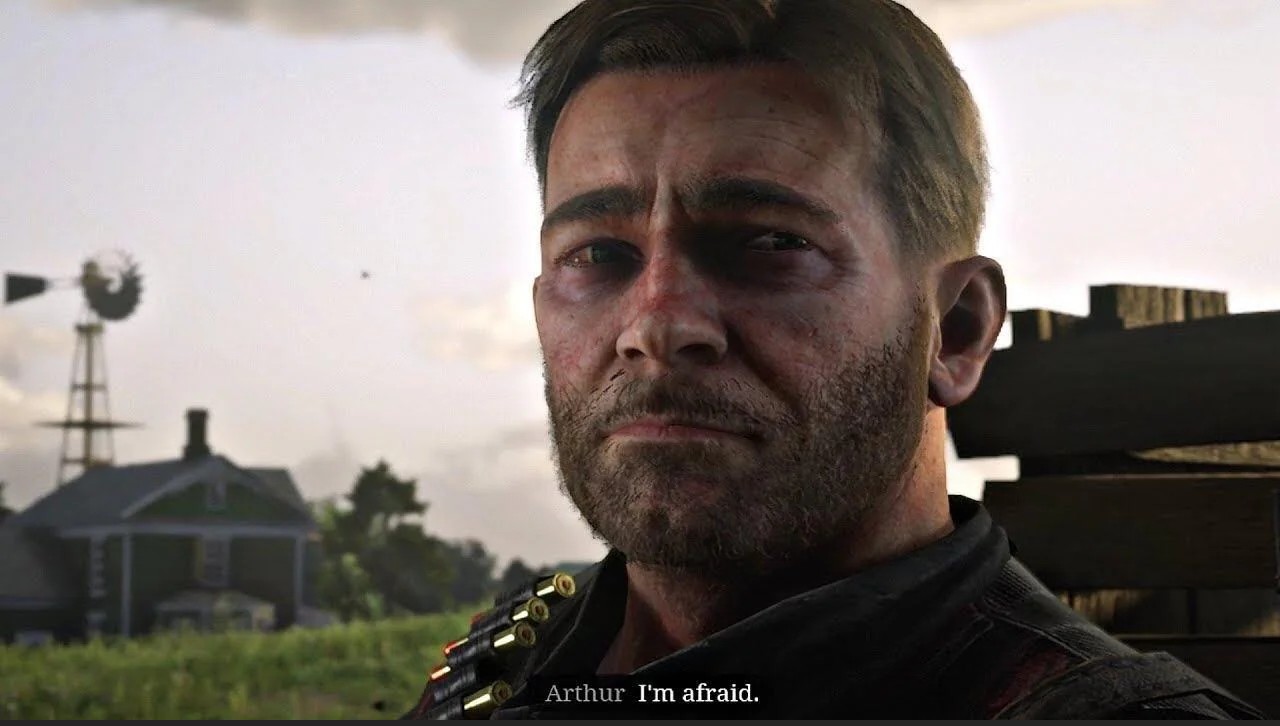
I think time is one of the truest measures of attachment. The more of it we give to something, the more space that thing takes up in our lives, and slowly the hours turn into familiarity, into memories, into routines, into bonds we never planned to form.
We rarely notice it happening. Nobody sits down and decides to become attached. It begins with small, repeated moments, a conversation that runs a little longer than expected, a place we keep returning to, a habit that slips quietly into the day. Then one morning we look back and realize that something ordinary has become something we cannot imagine being without.
This is not limited to people. It can happen with a story, a fictional character, or a game that takes hundreds of hours to finish. When you spend that long walking through the same world, meeting the same faces, listening to their stories, and living through their highs and lows, they become part of your own history, even though they were never real.
I think that is because memory does not check whether something was real before it keeps it. It only keeps what we spent ourselves on. A road traveled in a game can sit in the mind as firmly as a road traveled on foot, and a character who stayed beside us through a hard season can feel more like a companion than a name on a screen.
Researchers have actually looked into this. Two psychologists, Kamil Janowicz of SWPS University and Piotr Klimczyk of the Stefan Batory Academy of Applied Sciences, studied the emptiness that follows finishing a deeply immersive game, something players had been describing on online forums for years while science mostly ignored it. They called it post-game depression, and they built the first scale to measure it. Across two studies with 373 players, they found it was not a single feeling but a cluster of them, that is thoughts about the story that refuse to leave, a difficult ending, the urge to start the game over, and a loss of interest in other things to watch or play.
That is why finishing a long story can feel so much like saying goodbye. You are not grieving because you believe the world truly existed. You are grieving because the time you gave it was real, and so was the attention, and so was everything you felt along the way. The ending is only the moment you realize how much you had been carrying.
There is also a strange silence that follows. The credits end, the screen goes dark, and the routine that once held your evenings is suddenly empty. You reach for something that is no longer there, and for a while the days feel a little wider than before. It is a small grief, but it is an honest one.
Perhaps that is what grief has always been, a quiet proof that a bond once existed. The pain of losing something is only the shape of the space it used to fill. If we felt nothing at the end, it would mean we had given nothing along the way.
And maybe that is the part worth keeping. The endings that hurt the most are simply the endings of the things we spent the most time loving, and there is a kind of gentleness in that. It means the time was never wasted. It only changed form, the way a painting does, becoming something we carry rather than something we hold.